
Yes. If your garage is attached to the house, a leaky or uninsulated garage door is almost certainly raising your heating and cooling bills. It's not a myth one spouse made up to win an argument — it's basic building science. Here's the proof, and what to actually do about it.
Why an Attached Garage Acts Like an Open Window
Most attached garages share at least one wall with living space — often a laundry room, mudroom, or a bedroom above. That shared wall is usually insulated, but the garage door itself rarely gets the same attention. A standard non-insulated steel door has almost no R-value, meaning it does next to nothing to block outside temperatures from radiating into the garage air.
When that garage air gets extremely cold in January or brutally hot and humid in July, it pulls double duty: it drags down the temperature of the shared wall, and it leaks through gaps around the door directly into the garage, which then transfers through that wall into your house. Your furnace and AC end up fighting a battle they don't know they're fighting.
The Three Spots Where Air Actually Escapes
A leaky door usually isn't failing everywhere at once. It's failing in specific, fixable spots:
- The bottom seal. This rubber strip takes constant abuse from ice, road salt, and temperature swings. Once it cracks, hardens, or separates, cold air (and meltwater) pours straight under the door.
- Panel-to-panel weatherstripping. Sectional doors have seals between each panel. These stiffen and shrink with age, especially after repeated freeze-thaw cycles common in our winters.
- Perimeter and sensor gaps. Side and top weatherstripping, plus any gaps around windows or opener wiring penetrations, add up to more surface area than people expect.
How Much This Really Costs You
Nobody can hand you an exact dollar figure without seeing your door, insulation, and utility rates, but the mechanism is well understood. An uninsulated garage can swing to near-outdoor temperatures within hours. If that garage sits under a bedroom or next to a laundry room, your HVAC system has to work harder to compensate for that cold (or hot) boundary. Insulated garage doors are typically rated for noticeably better thermal performance than non-insulated steel doors, and sealing air leaks reduces the draft effect regardless of insulation level. The honest answer: it's not usually the single biggest line item on your energy bill, but it's a real, measurable drag — and it's one of the cheaper problems to fix.
A Quick Test You Can Do Tonight
Close the garage door, then go inside and turn off the lights in the garage. Have someone shine a bright flashlight around the full perimeter of the door from outside, or do it in reverse at dusk with the garage dark and someone outside looking for light leaking through. Any spot where light passes through is a spot where air passes through too. Also run your hand along the bottom seal and door panels on a cold morning — if you feel a cold draft, you've found your answer.
Fixes That Actually Move the Needle
- Replace the bottom seal and panel weatherstripping. This is inexpensive and often the single highest-impact fix, since it addresses the biggest leak points directly.
- Add rigid foam insulation kits to an existing uninsulated door if replacement isn't in the budget. It won't match a factory-insulated door, but it helps.
- Upgrade to an insulated door if yours is older and single-layer steel. Insulated doors generally run somewhere in the $800–$3,500 range installed, depending on size, material, and insulation level — a real investment, but one that also helps with noise and durability through our hot, humid summers and icy winters.
- Seal penetrations around the opener unit, vents, and windows with appropriate caulk or foam.
When to Call Hamilton Garage Door Pro
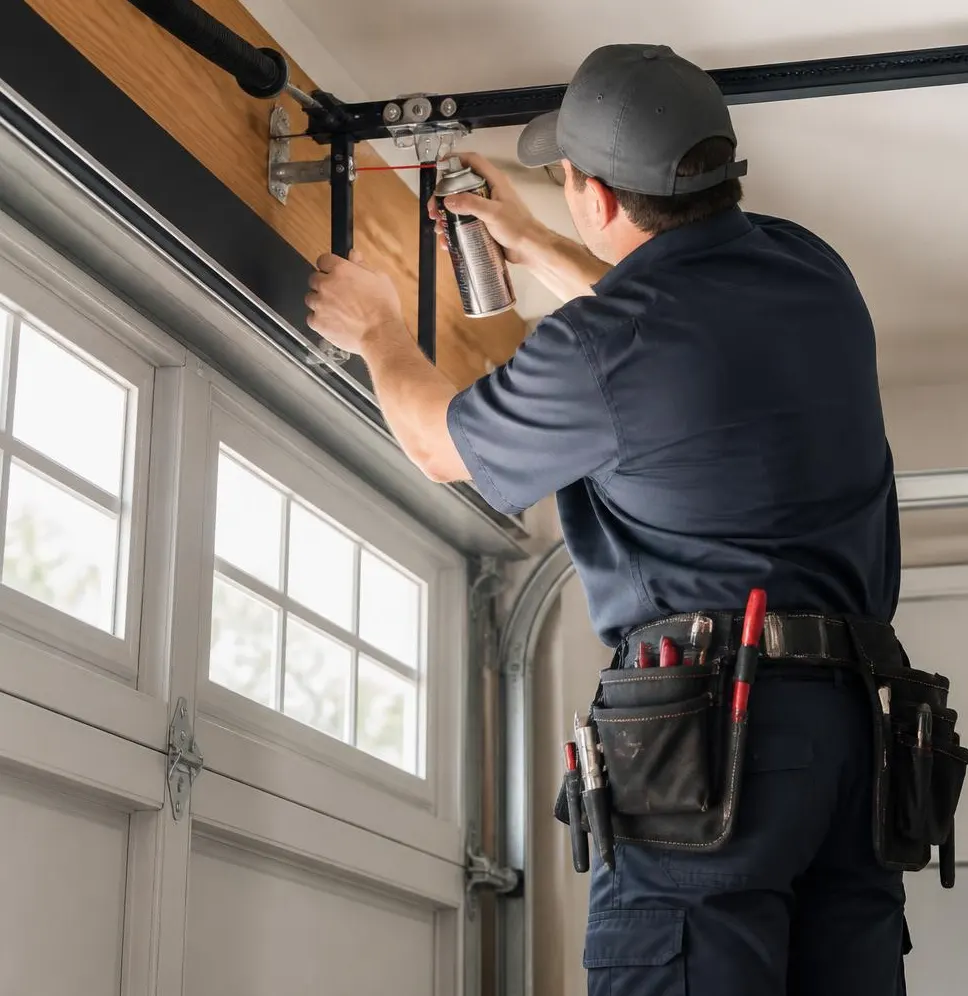
If your bottom seal is cracked, your panels no longer sit flush, or the door has visible warping from years of temperature swings, it's time for a proper look rather than another DIY patch. We handle garage door maintenance visits that check seals, hardware, and alignment, and we also do straightforward garage door installation if your current door is old enough that insulation upgrades don't make financial sense anymore. Either way, we'll tell you honestly whether you need a full replacement or just better weatherstripping — we're not going to upsell a door you don't need.
If you're in Hamilton, Fairfield, Middletown, Oxford, Trenton, Monroe, West Chester, or Liberty Township and you're ready to settle the argument for good, call Hamilton Garage Door Pro for an honest inspection and a clear recommendation.